
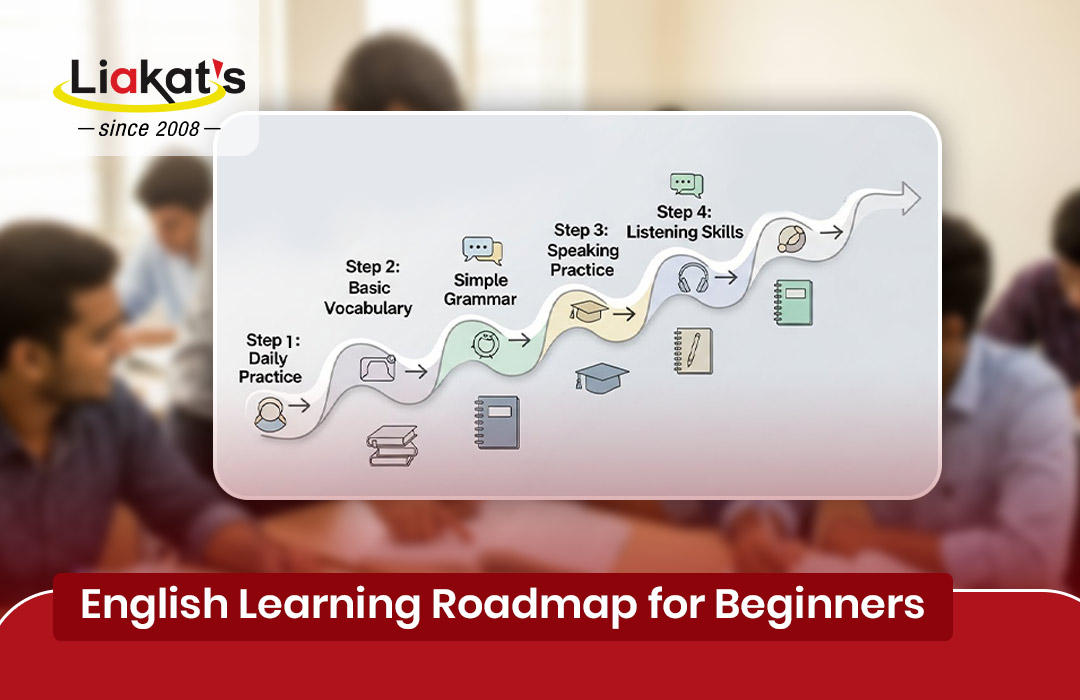
Learning English becomes much easier when you have a clear plan to follow. That is why this English Learning Roadmap is designed for beginners who want to improve step by step. Whether you want better job opportunities, higher confidence, or smoother communication, this guide will help you start your journey with the right direction.
What a Beginner Should Learn First in English
Every beginner should start with the basics. At the early stage, focus on simple words, basic grammar, and everyday communication. You do not need difficult vocabulary or advanced grammar rules. Start small and improve slowly.
Here is what you should learn first:
- Common greetings (Hello, How are you, Thank you)
- Everyday vocabulary (food, places, people, numbers, colors)
- Simple sentence structures (I am…, I like…, I need…)
A strong foundation makes the rest of the English Learning Roadmap easier to follow.
Step 1: Building Basic Vocabulary for Everyday Use
Vocabulary is the heart of any language. Without enough words, you cannot speak or understand English properly.
You can build vocabulary through:
- Flashcards
- Mobile apps
- Watching videos with subtitles
- Reading children’s books
- Learning 5–10 new words daily
Focus on high-use vocabulary such as:
go, come, eat, need, help, want, make, take, bring, find.
The more words you know, the faster you can communicate with confidence.
Step 2: Understanding Simple Grammar Rules
A beginner does not need advanced grammar. Instead, learn the basic rules that help you make correct sentences.
Essential grammar topics for the roadmap:
- Nouns, Pronouns, Verbs
- Present Simple Tense
- Past Simple Tense
- Future tense with “will”
- Using “is, am, are” correctly
Simple grammar allows you to speak more clearly and makes your sentences easier to understand.
Step 3: Learning to Form Clear Sentences
Once you know vocabulary and grammar, start forming sentences. This is one of the most important parts of your English Learning Roadmap.
Practice like this:
- Start with Subject + Verb + Object
- Use short, easy sentences
- Speak slowly and clearly
Example:
✔ I want to learn English.
✔ She is going to work.
✔ They need help.
The more sentences you build, the more confident you will become.
Step 4: Beginner Speaking Practice Tips
Speaking is often the hardest part for beginners. But with simple daily practice, you can improve quickly.
Try these easy methods:
- Practice speaking in front of a mirror
- Speak English with friends who are also learning
- Record your own voice and listen again
- Repeat phrases from movies or YouTube tutorials
- Join beginner English speaking classes
Speaking regularly builds fluency, even if your grammar is not perfect.
Step 5: Improving Listening Through Simple Content
Listening helps you understand native speakers and boosts your speaking skills at the same time.
Begin with easy content:
- English cartoons
- Simple podcasts
- YouTube channels for beginners
- Short English stories
- Songs with lyrics
While listening, try to catch familiar words. Over time, your brain will adjust, and your understanding will improve automatically.
Step 6: Starting to Read English for Better Fluency
Reading is one of the fastest ways to grow vocabulary and develop natural sentence patterns.
Best reading options for beginners:
- Storybooks
- Newspaper headlines
- Short blogs
- Social media posts
- English learning apps
Try to read at least 10 minutes every day. Reading will make your English more natural and fluent without stress.
Step 7: Writing Short Paragraphs and Messages
Writing helps you organize your thoughts and learn grammar naturally. You do not need to write long essays. Start small.
Begin with:
- WhatsApp messages
- Short diary entries
- Social media captions
- 3–4 line paragraphs
This improves sentence structure and keeps your English learning journey consistent.
Weekly & Monthly English Learning Goals for Beginners
Your English Learning Roadmap becomes more powerful when you set goals.
Weekly Goals:
- Learn 20–30 new words
- Study grammar for 30 minutes daily
- Practice speaking for 10–15 minutes
- Read for 2–3 days a week
Monthly Goals:
- Understand basic tenses
- Speak 3–5 minutes without stopping
- Read and understand short paragraphs
- Write your own 100–150 word story
Clear goals make learning more organized and result-driven.
Tracking Your English Progress (Self-Assessment Tips)
Tracking your improvement is important. It shows how far you have come and what you should improve next.
You can track with:
- Vocabulary notebooks
- Speaking recordings
- Monthly writing samples
- Online English tests
- Feedback from teachers
When you see progress, you feel more motivated to continue.
Conclusion
This English Learning Roadmap gives you a simple, step-by-step path to learn English faster and with more confidence. If you follow each stage carefully—vocabulary, grammar, speaking, listening, reading, and writing—you will notice improvements within weeks. Stay consistent, practice daily, and trust the process. Your English journey starts today.
Frequently Asked Questions
How long does it take to learn basic English?
Most beginners can learn basic English in 2–3 months with regular practice.
Is this English Learning Roadmap suitable for self-study?
Yes, the roadmap is designed for self-learners and beginners who want clear steps.
Do I need to memorize grammar rules?
No. Focus on basic grammar and learn naturally through speaking and reading.
How many new words should I learn daily?
Learning 5–10 words per day is enough for fast improvement.
Can I improve English without a partner?
Yes. You can use mirror practice, voice recording, and apps to improve alone.
What is the fastest way to improve English speaking?
Daily speaking practice, even for 10 minutes, is the fastest way to build fluency.