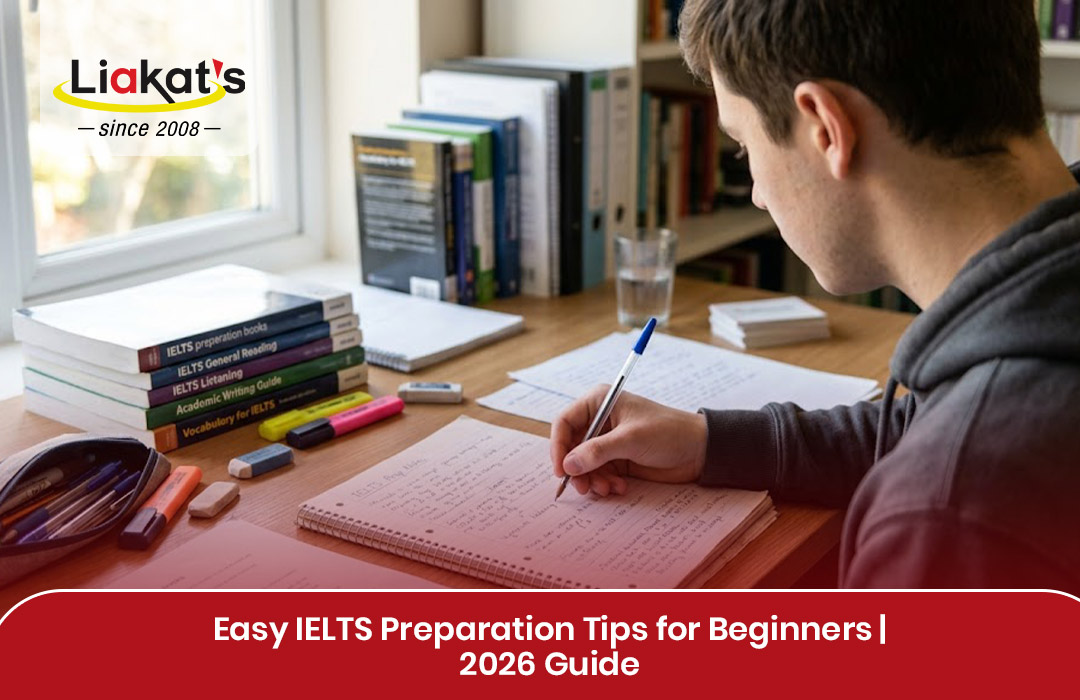
IELTS preparation tips for beginners are simple strategies that help new learners understand the exam format, improve English skills, and achieve a higher band score through daily practice and structured study methods.
Understand the IELTS Exam Format Before You Start
One of the most important IELTS preparation tips for beginners is to clearly understand the exam structure. When the format is understood early, preparation becomes easier and more focused.
The IELTS exam is divided into four main sections:
- Listening – 30 minutes
- Reading – 60 minutes
- Writing – 60 minutes
- Speaking – 11–14 minutes
Each section is designed to test different English skills. Therefore, the format should be studied carefully before practice begins.
Key Benefits of Understanding the Format:
- Stress is reduced during the exam
- Time management becomes easier
- Confidence is increased
- Preparation becomes more organized
Set a Realistic IELTS Study Plan for Beginners
A structured study plan is strongly recommended for beginners. Without a proper plan, preparation may feel confusing and slow.
A simple weekly schedule should be created so that each skill is practiced regularly.
Suggested Weekly Study Plan:
- Monday: Listening Practice
- Tuesday: Reading Practice
- Wednesday: Writing Practice
- Thursday: Speaking Practice
- Friday: Vocabulary & Grammar
- Saturday: Mock Test
- Sunday: Revision Day
When this routine is followed, progress is usually seen within a few weeks.
Improve Your English Vocabulary Daily
Strong vocabulary plays a major role in IELTS success. Therefore, vocabulary learning should be included in daily practice.
Daily vocabulary learning can be improved through:
- Reading English newspapers
- Learning 5–10 new words daily
- Using vocabulary apps
- Writing new words in sentences
- Reviewing old words weekly
LSI Keywords Used in Vocabulary Learning:
- IELTS vocabulary list
- Academic vocabulary practice
- English word learning for IELTS
When vocabulary skills are improved, higher band scores are often achieved.
Practice Listening Skills with Real English Audio
Listening practice is considered essential because accents and pronunciation styles vary widely.
Real English audio sources should be used regularly.
Recommended Listening Sources:
- English podcasts
- News broadcasts
- Educational YouTube videos
- IELTS listening practice tests
- English movies with subtitles
By listening daily, better understanding of spoken English is gradually developed.
Develop Reading Skills Using Simple Articles
Reading skills are improved when simple materials are used at the beginning.
Beginners should start with easy texts and gradually move to complex passages.
Reading Practice Materials:
- Online articles
- Newspapers
- IELTS reading samples
- Short educational blogs
- Academic reading materials
Reading daily helps improve:
- Speed
- Understanding
- Vocabulary recognition
As a result, reading scores are often improved significantly.
Learn Basic Grammar Rules for IELTS Success
Grammar mistakes are commonly made by beginners. Therefore, basic grammar rules should be practiced regularly.
Important grammar topics include:
- Tenses
- Prepositions
- Articles
- Sentence structure
- Subject–verb agreement
When grammar is improved, writing and speaking accuracy becomes stronger.
Practice Speaking English Every Day
Speaking confidence is built through daily communication practice.
English should be spoken as much as possible, even if mistakes are made.
Speaking Practice Ideas:
- Talk with friends in English
- Record your voice
- Practice common IELTS speaking questions
- Join speaking groups
- Describe daily activities in English
Gradually, fluency is improved and hesitation is reduced.
Take Mock Tests to Measure Your Progress
Mock tests are widely recommended because performance can be evaluated realistically.
Regular mock testing helps identify weak areas.
Benefits of Mock Tests:
- Real exam experience is created
- Time management skills are improved
- Weak skills are identified
- Confidence is built
Mock tests should be taken at least once every week.
Common Mistakes Beginners Should Avoid
Many beginners repeat the same mistakes during preparation.
These mistakes should be avoided early.
Common IELTS Mistakes:
- Ignoring the exam format
- Not managing time properly
- Memorizing answers without understanding
- Skipping daily practice
- Avoiding speaking practice
When these mistakes are corrected, performance is improved significantly.
Best Daily Routine for IELTS Beginners
A daily routine helps maintain discipline and consistency.
Step-by-Step Guide for Daily IELTS Practice
Step 1: Start with Vocabulary Practice (15 Minutes)
New words should be learned daily.
Step 2: Practice Listening (20 Minutes)
Audio materials should be used regularly.
Step 3: Read Short Articles (20 Minutes)
Simple reading materials should be selected.
Step 4: Write Short Paragraphs (15 Minutes)
Writing skills should be practiced daily.
Step 5: Speak for 10 Minutes
English conversation should be practiced daily.
When this routine is followed consistently, noticeable improvement is usually seen.
Self-Study vs Coaching for IELTS Beginners
| Feature | Self-Study | Coaching Classes |
| Cost | Low | Medium to High |
| Flexibility | High | Fixed Schedule |
| Guidance | Limited | Professional Support |
| Resources | Self-Collected | Provided by Institute |
| Feedback | Limited | Regular Feedback |
Both methods can be effective when used properly.
Frequently Ask Question
The best tips include understanding the exam format, creating a study plan, practicing daily, and taking regular mock tests.
Usually, 1–2 hours of focused practice per day is recommended.
Most beginners require 1–3 months of consistent preparation.
Yes, Band 7 can be achieved through structured practice and proper guidance.
Yes, strong vocabulary improves reading, writing, speaking, and listening scores.
Yes, weekly mock tests are strongly recommended to measure progress.
Conclusion
These IELTS preparation tips for beginners are designed to help new learners start their journey with confidence. When daily routines are followed and mistakes are corrected early, strong progress can be achieved within a short period.
Moreover, consistent practice, proper guidance, and realistic goals should always be maintained. Beginners are encouraged to start preparation today and build strong English skills step by step.
Ready to start your IELTS journey? Visit Liakat English today to access expert IELTS resources, practice materials, and beginner-friendly guides designed for fast success.