
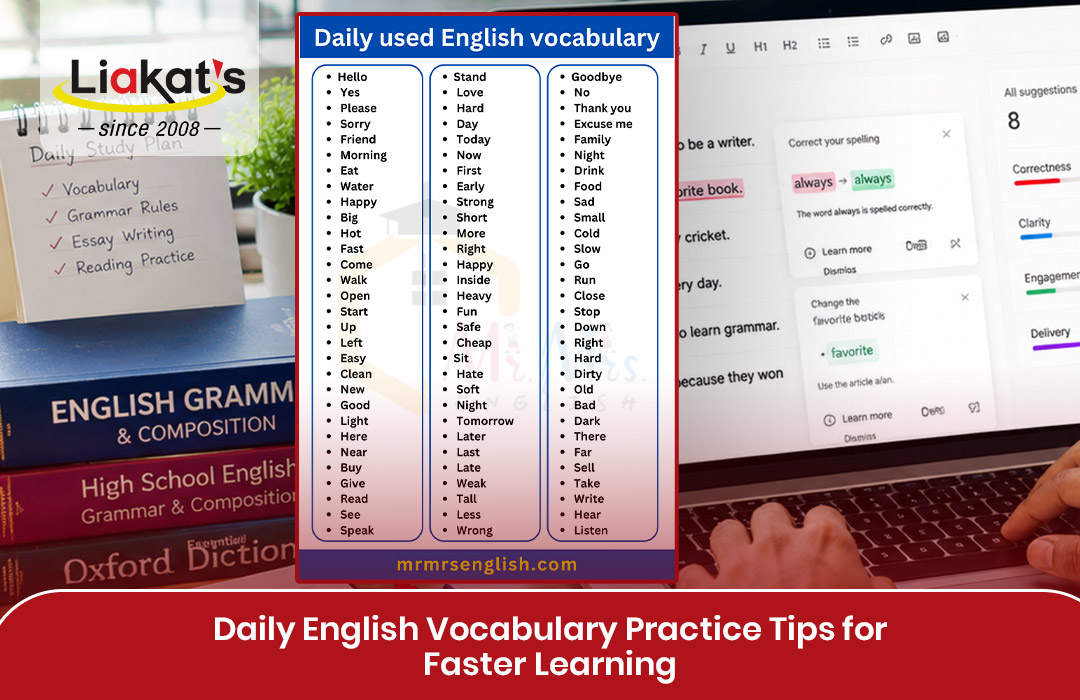
English vocabulary practice is the process of learning, memorizing, and using new English words regularly to improve communication skills. Daily vocabulary practice helps learners speak confidently, understand conversations easily, and improve reading and writing abilities faster.
Why English Vocabulary Is Important
English vocabulary plays a major role in communication. Without enough vocabulary knowledge, ideas cannot be expressed clearly. Strong vocabulary skills are needed for speaking, writing, reading, and listening.
When more words are learned daily, communication becomes smoother and more natural. Confidence is also increased during conversations, presentations, interviews, and IELTS exams.
Benefits of Strong English Vocabulary
- Better English speaking confidence
- Improved writing quality
- Faster understanding of conversations
- Better IELTS and academic performance
- Easier communication in daily life
- Improved pronunciation and fluency
Best English Vocabulary Practice Tips for Daily Learning
Many students struggle because vocabulary is memorized without proper practice. However, better results can be achieved through simple daily habits.
Effective English Vocabulary Practice Tips
- Learn 5–10 new words daily
- Use new words in sentences
- Practice speaking regularly
- Read English articles and books
- Watch English videos with subtitles
- Revise old vocabulary weekly
- Use vocabulary learning apps
- Keep a personal vocabulary notebook
Daily consistency is more important than learning many words at once.
How Reading Helps Vocabulary Improvement
Reading is considered one of the best ways to improve vocabulary naturally. Through reading, learners are exposed to new words in real contexts.
Best Reading Materials
- English newspapers
- Storybooks
- Blogs and articles
- IELTS reading passages
- Motivational books
- Educational websites
While reading, difficult words should be highlighted and written down for future practice.
Speaking Practice for Vocabulary Development
Vocabulary learning becomes stronger when words are used in conversations. Speaking practice helps learners remember words for a longer time.
Simple Speaking Activities
- Speak in English daily
- Describe daily activities
- Practice with friends
- Join spoken English classes
- Record your voice
- Repeat English dialogues
Fluency and pronunciation can also be improved through regular speaking practice.
Common Mistakes During Vocabulary Practice
Many learners spend hours memorizing words but still struggle to use them correctly. This happens because common mistakes are often made during practice.
Common Vocabulary Learning Mistakes
- Memorizing without usage
- Ignoring pronunciation
- Learning too many words together
- Not revising old vocabulary
- Avoiding speaking practice
- Translating every word directly
These mistakes should be avoided for faster improvement.
Good vs Poor Vocabulary Practice
| Good Vocabulary Practice | Poor Vocabulary Practice |
| Daily revision is done | Words are forgotten quickly |
| Words are used in sentences | Only memorization is done |
| Speaking practice is included | Speaking is avoided |
| Reading habits are maintained | No reading practice |
| Pronunciation is practiced | Pronunciation is ignored |
Consistent practice usually produces better long-term results.
Step-by-Step Guide to Improve English Vocabulary
Step 1: Learn New Words Daily
At least 5 new English words should be learned every day.
Step 2: Write the Meaning
The meaning, synonym, and example sentence should be written in a notebook.
Step 3: Practice Pronunciation
Correct pronunciation should be practiced using online dictionaries or videos.
Step 4: Use Words in Sentences
New vocabulary should be used in daily speaking and writing.
Step 5: Revise Weekly
Old vocabulary must be revised regularly to improve memory retention.
Step 6: Join an English Learning Program
Professional guidance can make vocabulary learning faster and easier.
Best Tools and Resources for Vocabulary Learning
Modern learning tools can help students improve vocabulary more effectively.
Recommended Resources
- English dictionary apps
- Flashcards
- YouTube English lessons
- IELTS vocabulary books
- English podcasts
- Online speaking courses
Professional English learning support can also help students stay motivated.
For structured English learning programs and vocabulary improvement classes, visit Liakats.com.
How Vocabulary Practice Helps IELTS Students
Vocabulary knowledge is extremely important for IELTS preparation. Better vocabulary helps students achieve higher scores in Writing and Speaking sections.
IELTS Benefits of Strong Vocabulary
- Better essay writing
- More fluent speaking
- Improved reading comprehension
- Higher band score opportunities
- Better grammar usage
- Increased confidence during the exam
Students preparing for IELTS should focus on academic and daily-use vocabulary together.
Frequently Asked Questions
Daily reading, speaking practice, revision, and using new words in sentences are highly effective vocabulary practice methods.
Learning 5–10 new words daily is usually considered effective and manageable.
Vocabulary can be remembered longer through regular revision and practical usage in speaking and writing.
Yes, reading regularly helps learners discover and understand new words naturally.
Dictionary apps, flashcard apps, and English learning platforms are commonly used for vocabulary improvement.
Yes, strong vocabulary skills help improve IELTS Writing, Speaking, Reading, and overall band scores.
Conclusion
Daily vocabulary practice is one of the most powerful ways to improve English communication skills. With proper learning techniques, vocabulary growth can become easier, faster, and more enjoyable. Reading, speaking, writing, and revision should all be included in a daily learning routine.
Consistent practice can improve confidence, fluency, and academic performance significantly. Whether you are preparing for IELTS, improving spoken English, or building communication skills, vocabulary learning should never be ignored.
If you want professional English learning support, vocabulary practice guidance, and IELTS preparation help, visit Liakats.com today and start improving your English confidently.